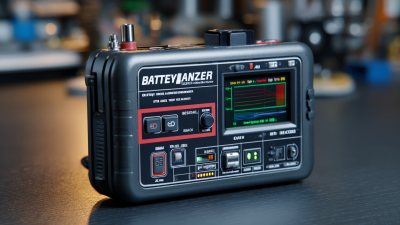
In today's fast-changing world of battery tech, the importance of a Digital Battery Analyzerhas never been more obvious. I recently came across a report from MarketsandMarkets that predicts the Battery Analyzer market will hit around $450 million by 2026—that’s pretty impressive! This growth kind of shows how the industry is moving towards smarter, more efficient ways to keep tabs on batteries. Experts say that using the latest tech like this can really help batteries last longer and perform better.
Dr. Emily Carter, who’s a big name in battery research at TechEnergy Solutions, stresses the importance of getting the details right. She mentions, “A Digital Battery Analyzer helps us get a much clearer picture of a battery’s health and boosts reliability for users.” Since batteries are now such a big part of everything from electric cars to renewable energy setups, it’s pretty clear that having the right tools to analyze them is more important than ever.
That said, there are still some hurdles. A lot of folks tend to underestimate how tricky battery diagnostics actually are. Digital tools can give tons of data, but without proper training, it can be really easy to misread what’s going on. That confusion could lead to bad decisions about how to use or maintain batteries. Looking at these challenges, it’s obvious that while Digital Battery Analyzers are super helpful, knowing how to use them well is the key to actually getting the most out of them.

Key Features of 2026 Top Digital Battery Analyzers
When choosing a digital battery analyzer, key features greatly impact performance. A top digital battery analyzer offers precise voltage measurement. Most devices operate within a range of 6V to 12V or more. The accuracy usually stays within ±0.1V. Many users report mixed experiences here. Calibration may not always be straightforward.
Another important feature is the capability to test multiple battery types. Lithium, lead-acid, and others must be analyzed correctly. Recent industry reports suggest over 30% of users struggle with battery compatibility. This raises concerns about reliability in testing. Manufacturers do claim universal compatibility, yet some devices underperform with specific batteries.
Ease of use is critical too. A clear digital display enhances user experience. Many analysts prefer larger screens for readability, especially in low light. However, some models have confusing interfaces. Likewise, the ability to produce detailed reports via USB is valuable. Yet, not all devices deliver consistent data export. Battery Tester Digital models aim to balance features with usability, but limitations remain.
Importance of Accuracy in Battery Testing and Analysis
Accurate Battery Testing is crucial in today's technology-driven world. Reports indicate that inaccurate readings can lead to device failures. This creates unnecessary downtime and costs for users. ADigital Battery Checker ensures precise analysis. This reliability helps in maintaining optimal performance.
Considering that over 30% of battery failures arise from poor testing methods, the importance of accuracy cannot be overstated. A simplified error in testing can result in misleading conclusions about battery health. Many users overlook regular testing, which could prevent these issues. A digital battery analyzer provides data that is not only easy to interpret but also highly reliable.
Inconsistent performance often stems from neglected maintenance. Investing in a digital battery checker can mitigate this risk. By analyzing voltage, capacity, and internal resistance, users can make informed decisions. Still, many devices underperform due to inadequate analysis. Ultimate efficiency comes only through precise monitoring and timely interventions.
Battery Health Assessment: Assessing Capacity and Internal Resistance
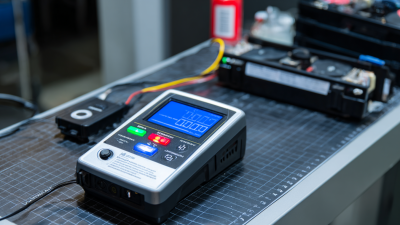
Evaluating battery health is crucial for performance. A Battery Digital Tester provides insights into two key areas: capacity and internal resistance. Capacity indicates how much energy the battery can hold. Internal resistance affects the flow of energy. Understanding both can enhance battery longevity.
When using a battery digital tester, observe the data closely. Assess the capacity readings. If they are significantly lower than expected, the battery may be deteriorating. Internal resistance should remain stable. Larger values can signal problems, impacting performance during use.
Tips: Regular assessments can prevent emergencies. Charge batteries fully before testing. Cold temperatures can impact readings. Always clean battery terminals for accurate results. Do not ignore declining trends. They speak volumes about battery health. Avoiding these simple checks might lead to unexpected failures.
2026 Top Digital Battery Analyzer Features and Benefits
| Feature | Description | Benefits |
| Capacity Testing | Measures the usable capacity of the battery. | Helps determine if the battery needs replacement. |
| Internal Resistance Measurement | Assesses the internal resistance to gauge battery health. | Indicates potential performance issues. |
| Real-time Data Analysis | Provides instant feedback on battery performance. | Allows for quick decision-making and actions. |
| User-friendly Interface | Simple controls and display for easy operation. | Makes diagnosing battery issues straightforward. |
| Data Logging | Stores test results for future reference. | Facilitates tracking battery performance over time. |
Advanced Communication Protocols: Enhancing Device Compatibility
In the rapidly evolving landscape of digital battery analyzers, advanced communication protocols are vital. These protocols enhance device compatibility significantly. They allow various devices to interact smoothly, improving overall functionality. This is essential, especially in environments where multiple devices operate simultaneously. Users can connect analyzers with smartphones, tablets, and computers effortlessly.
Compatibility isn't always guaranteed. Sometimes, older devices struggle with newer protocols. This can result in frustrating user experiences. The need for updates and adaptations can be a hassle. However, when devices are well-matched, users enjoy better data exchange. Enhanced communication leads to quicker diagnostics and improved performance assessments. These tools can also provide real-time updates, which are crucial for efficient battery management.
Another aspect is the user interface provided by these advanced protocols. Simple, intuitive designs attract users. But complexity often lurks beneath the surface. Users must still navigate settings to maximize their devices' potential. With the right knowledge, they can unlock powerful features that enhance their analysis. It’s a blend of ease of use and the challenge of mastering technology. This balance is what keeps the field dynamic and engaging.
Data Logging and Analysis: Tracking Performance Over Time
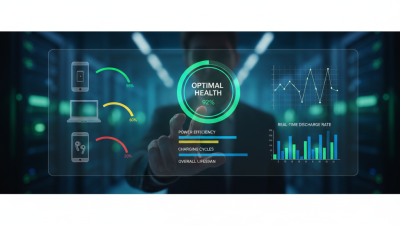
In today's fast-paced technological landscape, data logging and analysis are crucial for battery performance tracking. The latest digital battery analyzers come equipped with advanced features that enable users to monitor their systems effectively. Industry studies suggest that timely data insights can improve battery lifespan by up to 30%. This statistic highlights the importance of regular performance checks.
Analyzing performance data over time reveals patterns that may not be immediately obvious. For example, fluctuations in voltage or charging cycles can indicate potential issues. Reports indicate a growing trend of users adopting software that integrates with these devices. Such tools can visualize changes and alert users to irregularities. Yet, many operators still overlook the importance of routine checks, which could lead to unexpected failures.
While some analyzers provide basic logging capabilities, advanced models can capture real-time data with impressive accuracy. Operators should reflect on how they utilize these analytics. There may be opportunities for improvement in preventive maintenance practices. Data shows that nearly 25% of battery failures stem from a lack of monitoring. Therefore, leveraging comprehensive analysis can significantly mitigate risks and enhance efficiency in battery management systems.
User Interface Innovations: Enhancing Accessibility and Usability
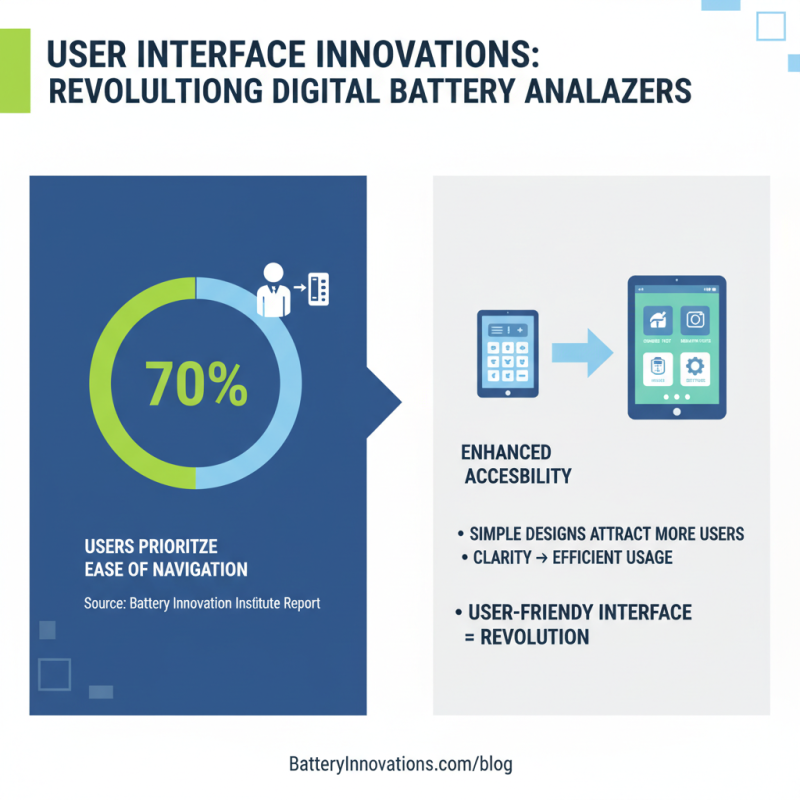
User interface innovations are revolutionizing digital battery analyzers. A user-friendly interface can drastically enhance accessibility. In a recent report by the Battery Innovation Institute, approximately 70% of users prioritize ease of navigation over technical features. Simple designs attract more users. Clarity in layout can lead to more efficient usage.
Modern analyzers often incorporate touchscreens for intuitive operation. This feature reduces the learning curve for users unfamiliar with technology. Visual indicators make data interpretation easier. Users can quickly identify battery health and performance metrics. An effective interface often includes color-coded alerts for different battery conditions, enhancing quick decision-making.
Tips: Always refer to the user manual for new features. Familiarize yourself with the interface before using the analyzer. Testing different options can reveal hidden functionalities. Embracing these innovations requires patience. Users may struggle at first but will appreciate the benefits later. Focus on gradually learning the interface to maximize the analyzer's potential.
Cost-Benefit Analysis: Evaluating ROI of Digital Battery Analyzers
Digital Battery Analyzers are becoming essential tools in various industries. They allow users to evaluate battery performance with accuracy. The return on investment (ROI) for these devices is significant. According to a study, effective battery management can reduce operational costs by up to 30%. For fleets, this is crucial, as battery failures can lead to costly downtimes.
Evaluating the ROI of Digital Battery Testers involves many factors. Initial costs can be high, but savings on maintenance and improved efficiency can offset this. Maintenance costs alone account for 40% of the total operational cost in battery management systems. Therefore, investing in reliable digital technology can lead to better financial outcomes.
Tips: Regular calibration of your Digital Battery Tester ensures accuracy. This small step can save money in the long run. Also, consider training staff on optimal usage to maximize benefits. Small mistakes in handling can lead to inflated costs, so continuous education is vital.
Advancing Energy Solutions: Insights from Global Market Reports on Multi-Channel Battery Testing Equipment for Enhanced Parallel Performance Analysis
The quest for innovative energy solutions has necessitated the development of advanced testing equipment, particularly in the realm of battery performance analysis. Multi-channel battery testing equipment plays a crucial role in this endeavor, allowing researchers and manufacturers to conduct thorough assessments of battery capabilities across various voltage applications. The rising demand for efficient energy storage systems underscores the need for reliable testing methodologies that can enhance parallel performance analysis, ensuring that products meet the rigorous standards of today’s market.
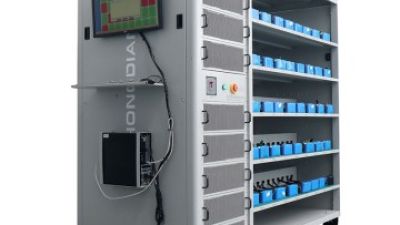
Among the advancements in testing technology, the all-in-one cabinet emerges as a pivotal tool. Its versatility and space-saving design make it an ideal solution for conducting battery charge and discharge testing, accommodating different battery voltages ranging from 15V to 100V. With the capability to support between 32 to 80 channels, this equipment enables comprehensive testing for a wide range of applications. By facilitating simultaneous tests, the cabinet enhances data collection and analysis, providing engineers with the insights necessary to improve battery designs and performance metrics.
As the market continues to evolve, the implementation of sophisticated testing solutions like the multi-channel battery testing equipment becomes increasingly essential. These innovations not only streamline the testing process but also contribute significantly to the advancement of energy storage technologies, empowering developers to create more efficient and sustainable battery systems that are crucial for a greener future.
FAQS
: One common challenge is setting clear goals. Without clear goals, teams may struggle to stay focused.
Prioritize tasks and set deadlines. Use tools like calendars and reminders to keep track of important dates.
Take a step back and reassess. Breaking tasks into smaller parts can reduce feelings of overwhelm.
Teamwork is crucial. Good collaboration can lead to innovative ideas and better solutions for complex problems.
Signs include misunderstandings and frequent conflicts. Team members may also seem disengaged or confused about tasks.
Be specific and constructive. Focus on behaviors and results rather than personal attributes to promote improvement.
Conclusion
The 2026 Top Digital Battery Analyzers offer a range of advanced features that significantly enhance the process of battery testing and analysis. Key features include high accuracy in measurements, essential for ensuring reliable battery performance assessment. This includes evaluating battery health through metrics such as capacity and internal resistance. Furthermore, these analyzers facilitate advanced communication protocols, which improve compatibility with various devices, thus broadening their applicability.
Data logging capabilities enable users to track battery performance over time, providing insights into usage patterns and potential issues. Innovations in user interfaces make these devices more accessible, enhancing usability for a diverse range of users. Lastly, conducting a cost-benefit analysis of Digital Battery Analyzers demonstrates their return on investment, making them an essential tool for professionals in the battery maintenance and testing industry.

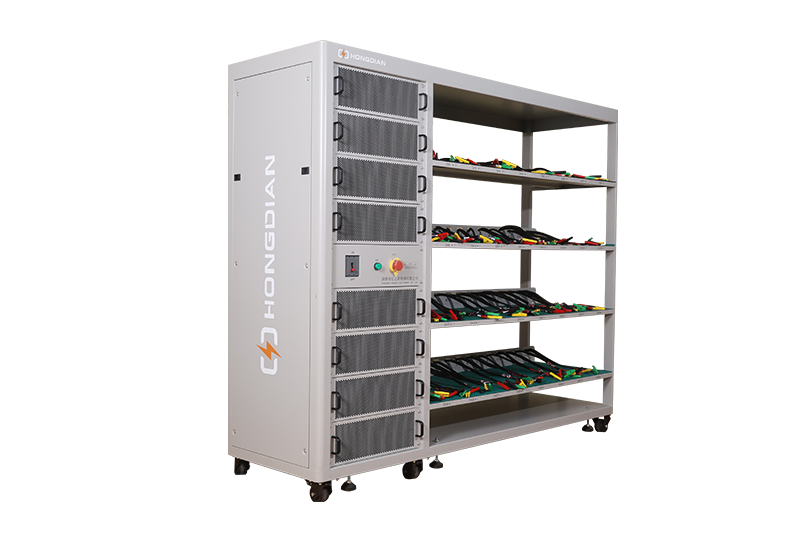 32/48 channel battery charging and discharging test integrated battery cabinet
 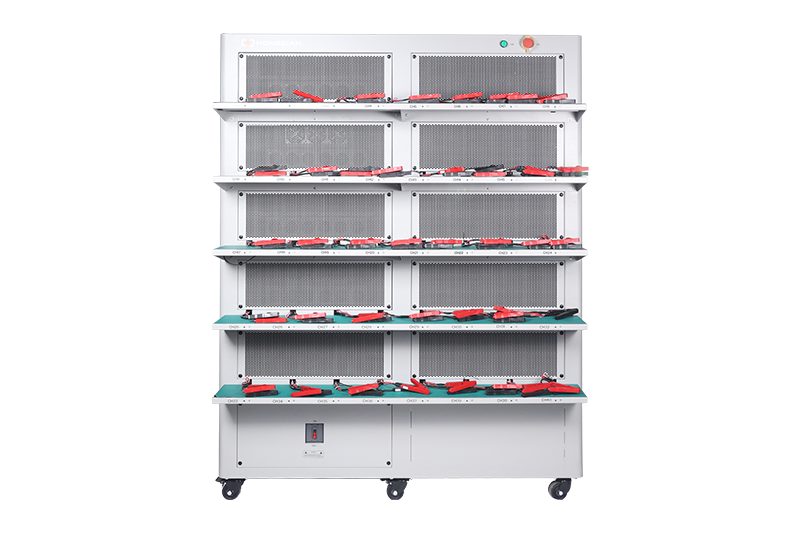 40 channel battery charging and discharging test integrated battery cabinet
  64 channel battery charging and discharging test integrated battery cabinet
 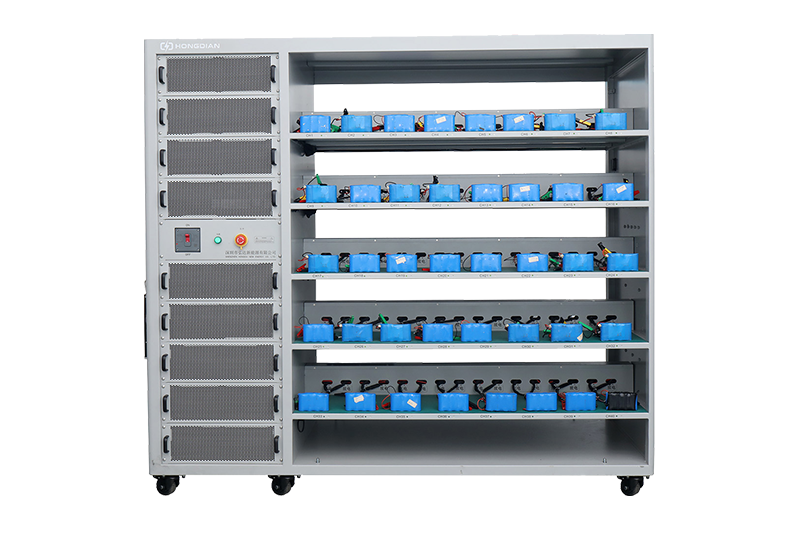 80 channel battery charging and discharging test integrated battery cabinet
 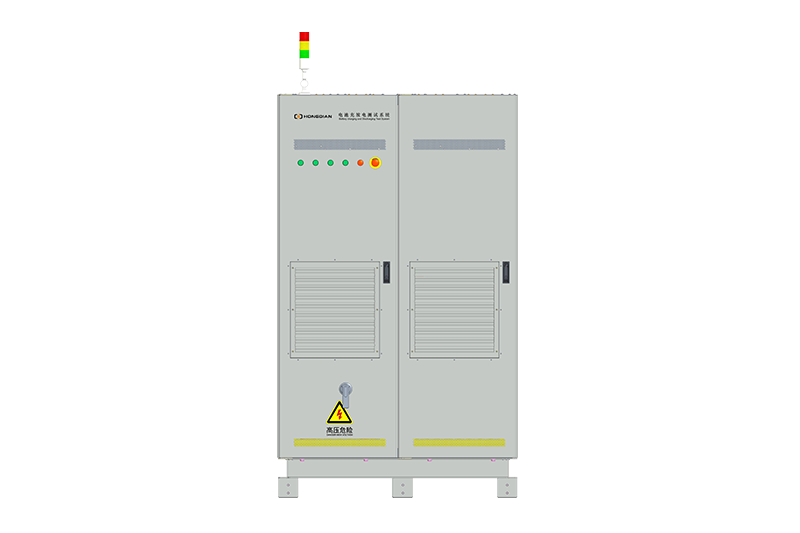 1000V-1500V High Voltage High Current Battery Testing System
 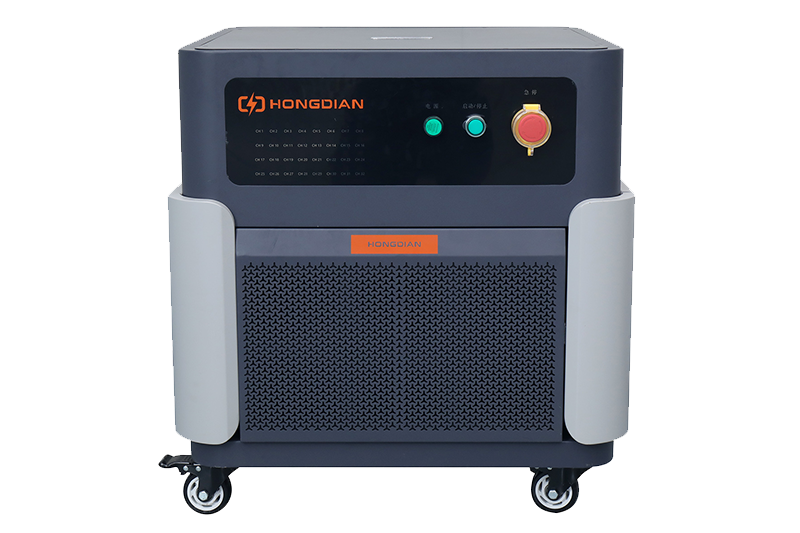 High-Precision Battery Testing System for Enhanced Performance Monitoring 30V/60V/100V/120V
 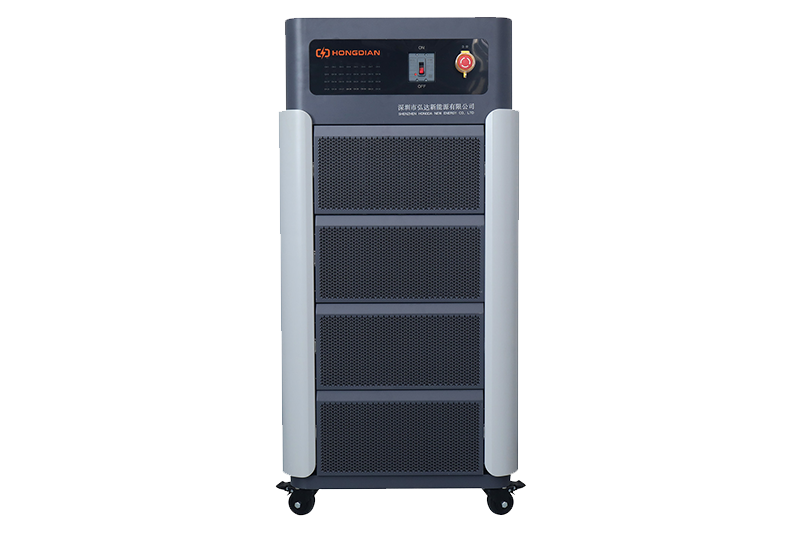 High-Precision Battery Charge Discharge Test Systems for EV Manufacturers
 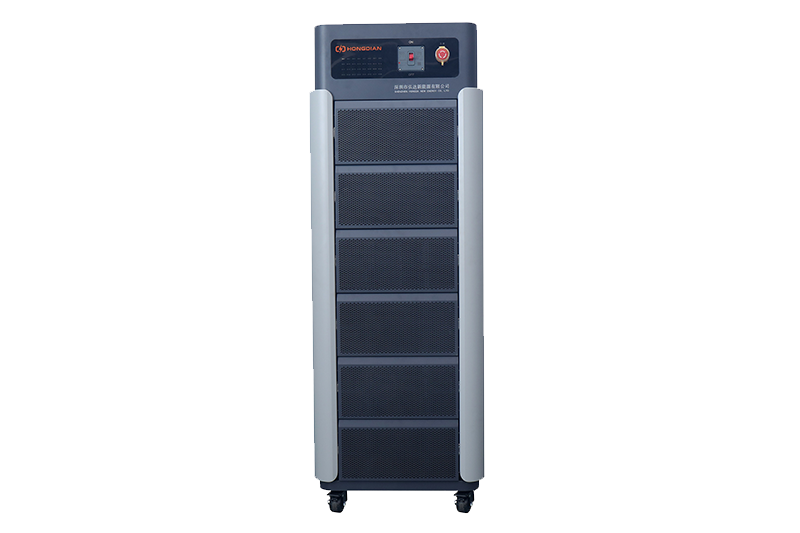 Precision Battery Test Racks for Cell Capacity & Internal Resistance Measurement
 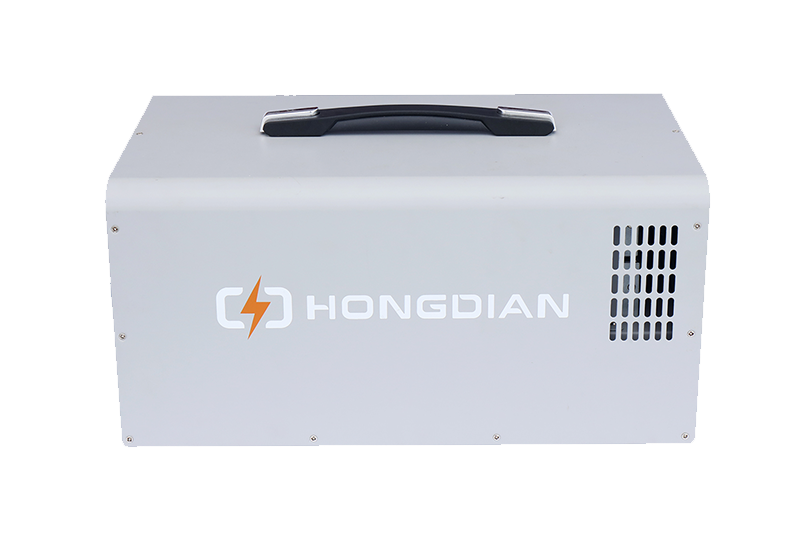 Multi-Channel Battery Testing Equipment for Parallel Performance Analysis